
An “accessible” or “compliant” label is not enough evidence to specify a building product. For Australian projects, product evidence should identify the exact model and configuration, the requirement being addressed, the test or assessment method, relevant limitations and the conditions under which the conclusion applies.
This matters for products such as tactile ground surface indicators, stair nosings, accessible sanitary fixtures, door hardware, signage, glazing markers, handrails, ramps, lifts and prefabricated access elements. A product may have useful test data and still be unsuitable for a particular location, finish, substrate, layout or NCC pathway.
This guide explains what architects, specifiers, manufacturers, builders and building surveyors should look for when reviewing accessibility product compliance evidence in Australia. It is general information only, not a product approval, legal opinion or project-specific compliance assessment.
Why product claims need to be checked in context
Accessibility requirements rarely apply to a product in isolation. They apply to a building element or completed arrangement: a sign installed in a particular location, a tactile indicator combined with an adjoining surface, a door set with specific hardware and circulation space, or a fixture located within a room layout.
The National Construction Code (NCC) includes requirements for evidence of suitability. NCC 2022 Part A5 explains that evidence must be appropriate to the use of the material, product, form of construction or design, and that submitted documentary evidence should be a complete copy of the original document. The acceptable evidence pathway depends on what is being demonstrated and the project context.
A useful product assessment therefore asks two separate questions:
- What properties or dimensions does the evidence establish?
- Do those properties address the requirements and proposed use on this project?
Confusing those questions is how a general marketing claim becomes an unsuitable project specification.
Assessment, testing and certification are not the same thing
These terms are often used loosely, but they describe different activities.
Product testing
Testing measures a property using a stated method. Depending on the product, that might include dimensions, force, slip resistance, luminance reflectance value, durability or another technical characteristic. A test report should identify the sample, method, results, date and organisation that performed the work.
A laboratory’s accreditation also has a defined scope. NATA explains that its endorsement is not permitted on reports for testing outside the organisation’s scope of accreditation. When accredited testing is relied upon, check both the report and the laboratory’s relevant scope rather than assuming every service offered by an accredited organisation is accredited.
Product assessment
An assessment interprets available information against defined criteria. It may review test reports, drawings, samples, measurements, installation instructions and applicable requirements. The value of the assessment depends on the assessor’s competence, the information supplied and how clearly its scope and limitations are documented.
ASN’s product assessment and certification service can review products intended for use by people with disability and issue a Letter of Advice recording the assessment and outcome. ASN’s service page also makes an important limitation clear: its certification process is not itself a legislative or Australian Standard requirement. It should not be represented as statutory project approval.
Third-party product certification
Certification is a formal conformity-assessment activity undertaken under a defined scheme. The ABCB describes CodeMark as a voluntary third-party building product certification scheme. A current CodeMark Certificate of Conformity is one option for NCC evidence of suitability, but its scope, conditions, limitations and project application still need to be checked.
Not every accessibility product requires or is suited to CodeMark. Nor does every document called a “certificate” have the same status. The document title is less important than who issued it, under what authority, for which product, against which criteria and with what limitations.
Ten checks before relying on accessibility product evidence
1. Identify the exact product
Match the evidence to the model number, size, material, finish, colour, manufacturing location and revision being supplied. A report for one variation should not automatically be extended to a family of products unless the document expressly supports that application.
2. Define the intended use
State where and how the product will be used. Interior and exterior conditions, wet exposure, substrate, traffic, maintenance, mounting method and surrounding finishes can all affect suitability. Evidence for a laboratory sample may not resolve the performance of a completed installation.
3. Identify the requirement being addressed
A broad statement such as “AS 1428 compliant” is usually too vague. Ask which provision, property or functional outcome is being assessed, which document calls it up and which edition applies to the project. Australian Standards do not all become mandatory merely because they exist; their relevance may arise through the NCC, legislation, an approval, contract or specification.
4. Check the evidence pathway
Determine whether the project relies on a Deemed-to-Satisfy pathway, a Performance Solution or another contractual or approval requirement. The appropriate evidence may differ. The ABCB’s NCC assessment-method guidance lists evidence of suitability alongside comparison with Deemed-to-Satisfy Provisions, Verification Methods and Expert Judgement.
5. Read the complete report or certificate
Do not rely on a cropped first page, marketing extract or badge. Review the whole document, including appendices, photographs, sample descriptions, assumptions, exclusions, installation requirements, expiry dates and conditions. Confirm that document numbers and page counts are complete.
6. Check who performed the work
Look for the issuing organisation, responsible person, qualifications or accreditation, signature or authorisation, and contact details. Where a test report claims accredited status, check the laboratory and the relevant test activity in the NATA directory.
Accreditation, testing and certification are different concepts. JAS-ANZ notes that producers seek certification bodies to certify products, people or management systems, while accreditation concerns the bodies that perform conformity assessment. A credible evidence package should use the terms accurately.
7. Confirm the test or assessment method
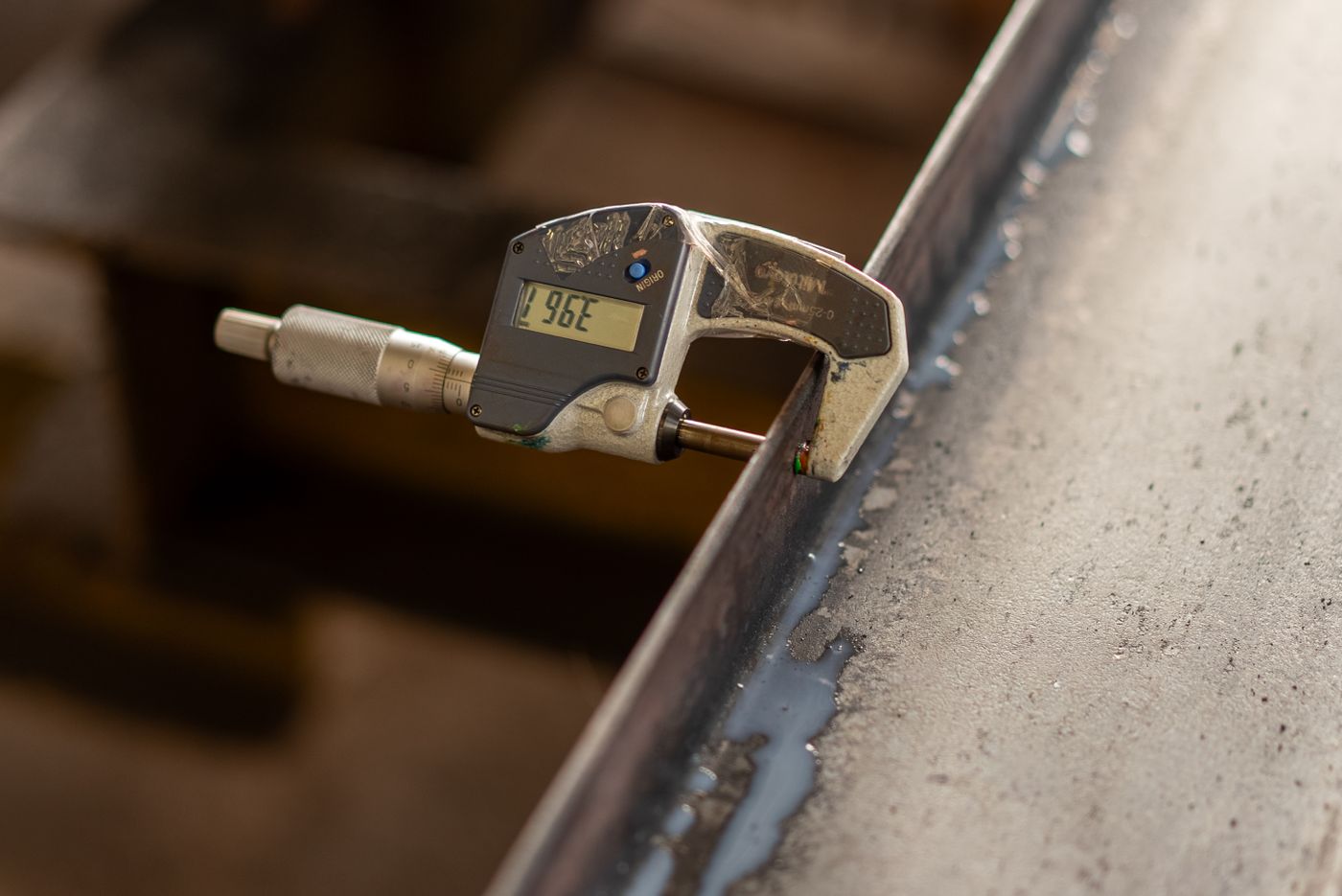
The document should explain how the conclusion was reached. Check the standard, appendix, instrument, calibration information, sample preparation, environmental conditions and calculation method where relevant. A pass/fail statement without a transparent basis may be difficult for a project team or authority to evaluate.
8. Review limitations and validity
Check issue and expiry dates, withdrawal or suspension status, geographic limitations, excluded configurations and whether later design changes affect the conclusion. For CodeMark certificates, use the official register and current certificate rather than a supplier’s archived copy.
9. Coordinate installation requirements
A suitable product can be installed incorrectly. Review set-out, fixings, substrate preparation, joints, clearances, orientation, adjacent finishes, tolerances and maintenance instructions. Put the critical requirements on project drawings and specifications rather than leaving them only in a supplier document.
10. Confirm project acceptance
The relevant building surveyor, certifier, authority, principal or other responsible decision-maker may need to accept the evidence. Ask what will be required before procurement, particularly for an unusual product or Performance Solution. An access consultant can help explain accessibility criteria, but statutory acceptance remains with the responsible authority or practitioner.
Examples of evidence gaps in common access products
Tactile ground surface indicators
A supplier may provide information about the tactile product, but project performance also depends on layout, location, dimensions, slip resistance, luminance contrast, substrate and installation. A colour name or catalogue photograph is not a luminance-contrast result for the installed combination.
Stair nosings and floor finishes
Check the product profile and installed geometry as well as contrast, slip-related evidence, fixings and transitions. A change to tread finish can alter the adjoining-surface relationship even when the nosing product is unchanged. Where luminance data is needed, ASN provides luminance contrast testing for products and installed elements.
Accessible signage
Evidence may address sign construction, tactile characters, Braille or contrast, but the project still needs correct content, location, mounting and relationship to the door or facility. A compliant sign supplied for the wrong room remains a project defect.
Sanitary fixtures and accessories
Confirm product dimensions and operating characteristics, then coordinate the room layout. Pan projection, seat, grabrails, flush controls, basins, taps, dispensers, bins and door swings all interact with required circulation and reach conditions. A fixture data sheet does not assess the completed room.

What manufacturers should include in an evidence pack
A clear evidence pack makes review easier and reduces the risk of a product being rejected or misused. Consider including:
- a precise product and model description;
- dimensioned drawings and tolerances;
- materials, finishes and available variations;
- the intended and excluded uses;
- complete current test reports and certificates;
- the criteria and document editions assessed;
- installation instructions and substrate requirements;
- maintenance, replacement and inspection information;
- expiry, surveillance or change-control information where applicable; and
- a contact for technical questions.
When a product changes, review whether its evidence remains applicable. A new supplier, material, coating, manufacturing method or size can be technically significant even when the product name stays the same.
What specifiers should record
The specification should name the accepted product or define measurable performance and evidence requirements. It should also establish a process for substitutions. “Approved equivalent” is risky if no one defines equivalence, reviews the evidence or checks the final installation.
Keep the accepted evidence with the project record, identify any conditions on drawings and include critical items in inspection plans. For higher-risk elements, an onsite access inspection can check whether the supplied and installed condition matches the reviewed information.
A practical review sequence
- Define the project requirement and proposed use.
- Identify the exact product and configuration.
- Collect complete current evidence.
- Check the issuing body’s role, competence and scope.
- Map each conclusion to the relevant project criterion.
- Record limitations and installation conditions.
- Obtain acceptance from the responsible project decision-maker.
- Inspect substitutions and the completed installation.
ASN can assist manufacturers and project teams with accessibility product reviews, design advice and testing. To discuss a product, proposed application or evidence package, contact ASN.