
Accessible adult change facilities support people who cannot use a standard accessible toilet independently and may need a hoist, adult-sized change table and assistance from a carer. For some Australian public buildings, they are also a specific National Construction Code requirement, not an optional amenity upgrade.
The key project question is not simply, “Do we need a bigger accessible toilet?” An accessible adult change facility is a separate, purpose-designed facility with its own room, equipment, circulation, door, signage and operating-instruction requirements. It cannot be treated as a standard sanitary compartment with extra equipment added late in construction.
This article explains when accessible adult change facilities in Australia may be required, what project teams should coordinate, and where access audits commonly identify risk. It provides general information only and should not be used as legal, certification or project-specific compliance advice.
What is an accessible adult change facility?
An accessible adult change facility, often shortened to AACF, is a sanitary facility designed for people with more complex support needs. The NCC 2025 requirements include equipment such as a room-covering hoist, toilet pan and grabrails, washbasin, adult-sized change table, changing rails, automated sliding entrance door, signage and operating instructions.
That makes an AACF fundamentally different from a standard unisex accessible sanitary facility, an ambulant sanitary facility, a parents’ room, a baby change room, or a standard staff-assisted bathroom. It may also differ from a Changing Places facility delivered under a separate registration or funding pathway.
When does the NCC require one?
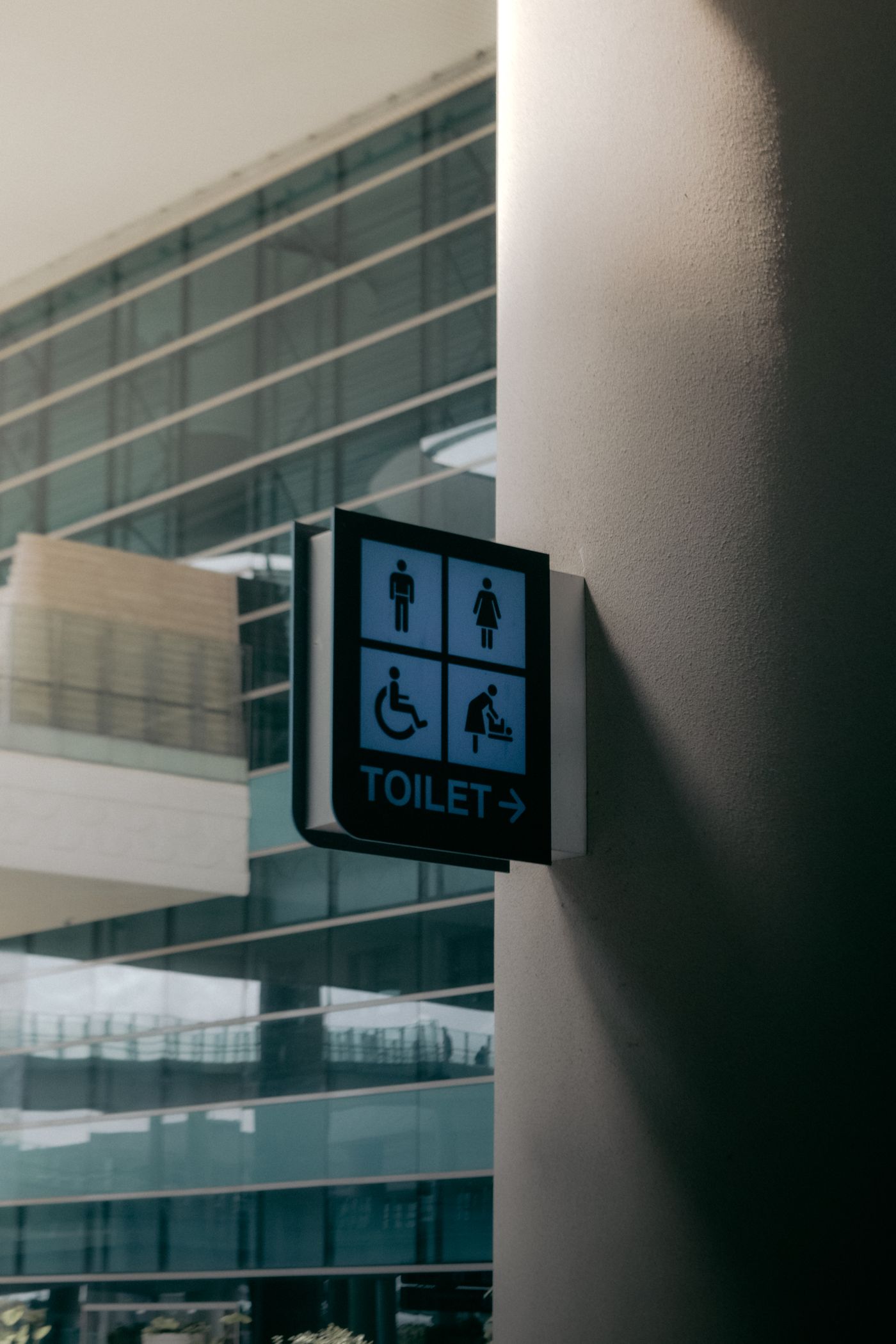
NCC 2025 Volume One, F4D12 requires one unisex accessible adult change facility in an accessible part of certain large public buildings. The listed triggers include specific shopping centres, sports venues, large swimming-pool venues, museums, art galleries, theatres and passenger-use areas of airport terminal buildings that meet the relevant thresholds.
The thresholds are important. F4D12 uses design occupancy and building-use triggers rather than applying to every shop, school, office or community building. It also references how design occupancy is calculated and excludes certain areas from that calculation.
Where F4D12 applies, the facility must be constructed in accordance with NCC 2025 Specification 27 and cannot be combined with another sanitary compartment.
Why early design coordination matters
AACFs affect architecture, structure, hydraulics, electrical services, door hardware, equipment procurement, signage, maintenance and operations. Late decisions can create major problems because the room needs to contain all required equipment and fixtures, provide required circulation spaces, and support safe assisted use.
Project teams should resolve the AACF strategy before documentation is locked. Important questions include:
- Does F4D12 apply to the building class, use and design occupancy?
- Is the facility located in an accessible part of the building?
- Can the unisex facility be entered without crossing a sex-specific area?
- Does the room contain the required equipment and fixtures in one room?
- Can the hoist, change table, toilet, washbasin, changing rails and bins fit without compromising circulation?
- Can the automated sliding entrance door, controls and indicators be installed as required?
- Has signage been coordinated with Specification 27 and the broader signage strategy?
- Who will maintain, inspect and operate the equipment after handover?
Design elements that commonly create risk
Room size and circulation
The facility is not just a larger toilet. Specification 27 includes circulation spaces for turning, transfer beside and in front of the pan, washbasin use and changing rails. These spaces may overlap in some circumstances, but the design still needs to be deliberate and documented.
Hoist and structure
The NCC specification requires a room-covering hoist system with nominated performance characteristics. The hoist needs structural support, power, safe working load considerations, maintenance access and operating instructions. The design team should not leave this to a late equipment substitution without checking the knock-on effects.
Change table and fixtures
The adult-sized change table, washbasin, grabrails, mirrors, dispensers, hooks and bins all need to be located so that the room can work as a whole. A compliant product does not guarantee a compliant room if the layout compromises circulation, reach ranges or safe assisted use.
Door and controls
Specification 27 includes requirements for the automated entrance door, door controls, threshold, clear opening, luminance contrast, operating behaviour, indicator lights and tactile/Braille information for controls. This is a combined access, door-hardware, electrical and operational issue.
Accessible adult change facility versus Changing Places
Project teams often ask whether an NCC accessible adult change facility is the same as a Changing Places facility. They are related concepts, but the answer should not be assumed.
The NCC sets minimum building requirements for specific building work and building classifications. Changing Places is a recognised facility model and registration program with its own design guidance and operational expectations. A project may decide to pursue Changing Places registration for user benefit, funding, policy or stakeholder reasons, but that decision should be checked alongside the NCC pathway.
What should be included in documentation?
For approval and handover, useful documentation may include the building classification, use and occupancy assumptions; the F4D12 trigger assessment; plans showing the location and accessible path of travel; room layout drawings; equipment schedules; structural and services coordination notes; signage and operating instructions; commissioning, training and maintenance records; and any limitations needing specialist certification.
Existing buildings and audits
Existing buildings may need review when they are altered, expanded, repurposed or assessed for accessibility upgrades. An onsite access audit can identify whether an existing facility appears to align with the intended function, whether signage and access paths are clear, and whether further design or specialist equipment review is needed.
A desktop access review can also help at design stage, particularly where a venue expansion or new public facility is approaching a trigger threshold.
Practical next steps
If a project may trigger F4D12, the project team should confirm the adopted NCC edition, verify the building-use and design-occupancy assumptions, and coordinate the AACF before room sizes, equipment procurement and services are locked in.
ASN can assist with access advice, design review and audits for projects where accessible adult change facilities may be required. For project-specific assistance, request a fee proposal or contact ASN.
This article provides general information only. Requirements depend on the project, adopted NCC edition, jurisdiction, building classification, use, occupancy and design. It is not legal advice, certification advice or a project-specific compliance assessment.